Mars and Saturn are both enigmatic planets that have captivated the attention of astronomers, scientists, and space enthusiasts alike.
While they may seem relatively similar at first glance, these two planets vary greatly in terms of their size, composition, and orbital patterns.
Let’s take a closer look at how they differ from one another.
Size and Distance from the Sun
One of the most obvious differences between Mars and Saturn is their size. Mars is much smaller than Saturn; while Saturn measures approximately 74,000 miles in diameter at its equator, Mars measures just 4,200 miles across at its equator. This means that Saturn is more than 17 times larger than Mars!
Additionally, both planets orbit the sun at different distances—Mars orbits about 141 million miles away from the sun, while Saturn orbits about 890 million miles away from our star.
Composition and Surface Features
Mars has a much thinner atmosphere than Saturn which means that it has far fewer surface features. The most prominent surface feature on Mars is Olympus Mons—the largest volcano in our entire solar system!
In comparison to other planetary mountains—like Earth’s Mount Everest—it stands an impressive 16 miles tall!
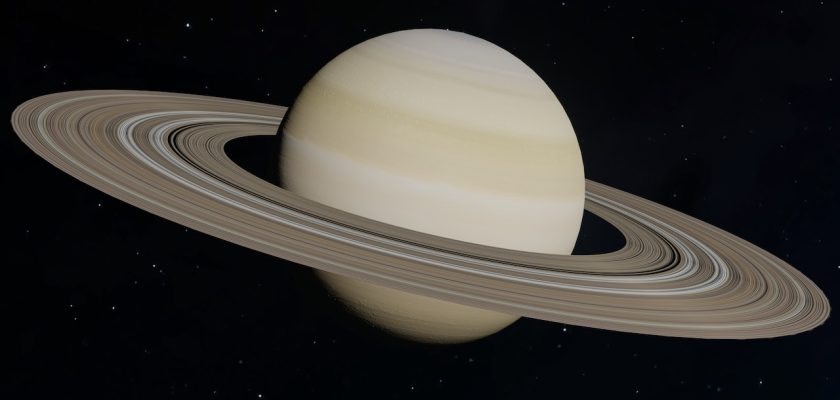
On the other hand, Saturn’s atmosphere is composed mostly of hydrogen and helium gas; as a result of this composition, it has several rings composed of ice particles orbiting its equator. These rings are made up of primarily water ice particles with some rock mixed in for good measure.
Orbital Patterns and Moons
Finally, let’s talk about the orbital patterns and moons of each planet. Mars orbits around the sun once every 687 Earth days compared to Saturn which takes about 29 Earth years to make a full revolution around our star!
As for moons—Mars has two small moons called Phobos and Deimos while Saturn boasts an astounding 62 known moons (and counting!).
These moons range in size from tiny pebbles to Titan—the second-largest moon in our Solar System measuring 3200 miles across!
Conclusion
At first glance, it may seem like there isn’t much difference between Mars and Saturn but this simply isn’t true!
While they share certain similarities like being planets orbiting around the sun they also differ greatly in terms of their size composition surface features orbital patterns and even the number of moons!
Whether you’re an astronomer or just someone who likes looking up into the night sky it’s fascinating to think about how different these two planets really are!

