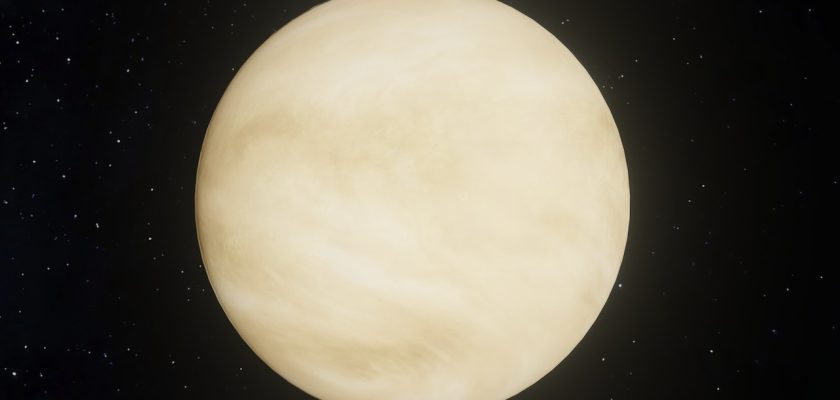
Mars and Venus are two of the most well-known planets in our solar system. While they may seem like they’re worlds apart, they actually have a few similarities.
In this blog post, we will compare these two celestial bodies to help you understand their differences and similarities.
Location
Mars and Venus are located in different areas of the solar system. Mars is located in the inner part of our solar system between Earth and Jupiter, while Venus is located just outside of Earth’s orbit. This means that Mars is closer to the sun than Venus is.
Size and Mass
The sizes and masses of these two planets differ greatly from one another as well. Mars has a mass that is about 10% of Earth’s mass, making it much smaller than our planet.
Meanwhile, Venus has a mass that is 81% of Earth’s mass, making it much larger than its neighbor planet. Additionally, Mars has a diameter of 4200 km while Venus has an even greater diameter at 12100 km – nearly three times bigger!
Atmosphere and Climate
The atmosphere and climate on these two planets vary drastically as well. On Mars, the atmosphere consists primarily of carbon dioxide and nitrogen with small amounts of other gases such as argon and oxygen.
This means that the climate on Mars is much colder than on Earth due to its thin atmosphere that does not trap heat very well – temperatures can reach up to -87 degrees Celsius (-125 Fahrenheit).
On the other hand, the atmosphere on Venus consists mostly of carbon dioxide which traps heat very well – resulting in extremely hot temperatures reaching up to 460 degrees Celsius (860 Fahrenheit). This makes it one of the hottest planets in our solar system!
Conclusion
As you can see, there are many differences between Mars and Venus despite their similar orbits around the sun.
Their atmospheres, climates, sizes, and masses are all vastly different from each other which makes them two completely different worlds within our own solar system!
Those who want to learn more about these fascinating planets or explore their differences further should definitely check out resources available online or visit your local library for more information. Thanks for reading!

