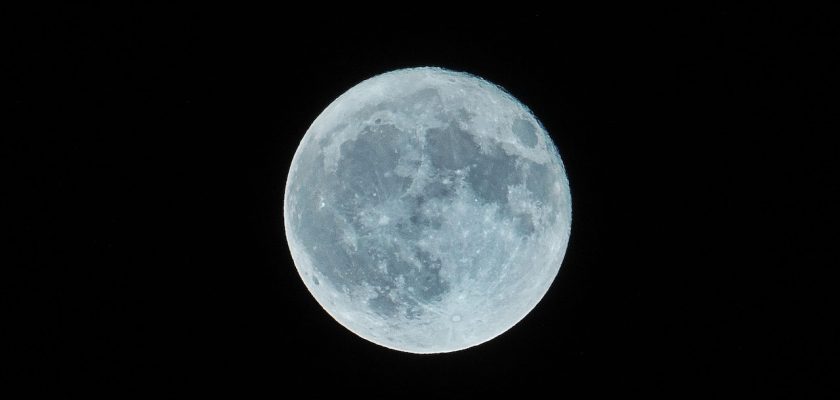
Have you ever wondered how it’s possible to see the moon from Earth? It’s amazing to think that we can observe a celestial object so far away, but when it comes down to it, there are two main factors that make this possible.
Let’s dive into what makes it possible for us to witness such a beautiful sight.
The Moon is Closer Than You Think
Firstly, although the moon is 238,855 miles away from Earth when compared to other objects in the solar system or even beyond our own planetary neighborhood, that distance isn’t too far.
The sun is 93 million miles away from the earth and the closest star system Alpha Centauri is about 4.2 light years away—that’s equal to 23 trillion miles! When put into perspective like this, the moon doesn’t seem so distant after all.
Earth’s Atmosphere Enhances Our View of the Moon
The second factor that allows us to view the moon from Earth is our atmosphere. The atmosphere acts as a filter and allows us to see only certain wavelengths of light.
Only visible light reaches our eyes and gives us an incredible view of the moon and stars above us. Without it, we wouldn’t be able to observe much at night beside a few large planets like Jupiter or Saturn.
The light reflects off of small particles in our atmosphere which helps magnify its brightness making it look more vibrant than if we were looking at it in space with no filtering effects at all.
Additionally, clouds also help reflect sunlight onto the moon during different phases which allows for various levels of visibility depending on their location in relation to Earth and the Sun.
Conclusion
The combination of these two factors—the proximity of the Moon and Earth’s atmosphere—make it possible for us to observe and appreciate one of nature’s greatest wonders: The Moon!
Next time you’re out looking up at night, take a moment to marvel at how amazing our planet really is! Whether you’re seeing a full moon or just a sliver on the horizon, its beauty never ceases to amaze you!

