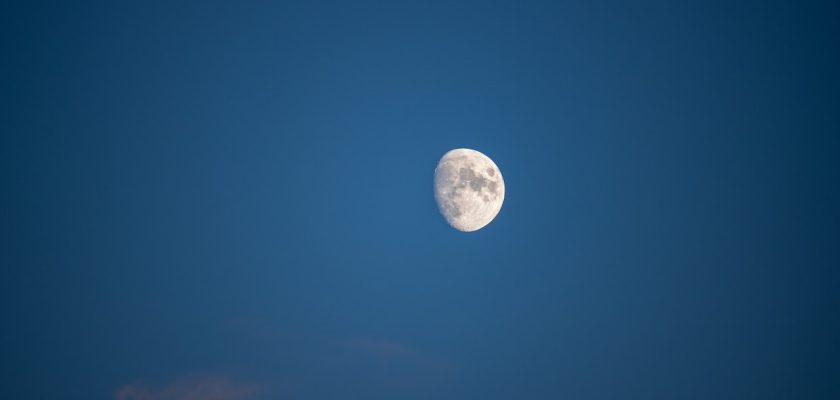
Astronomers have studied the moon and Jupiter for centuries, but what makes them different?
From their composition to their size, the differences between these two celestial bodies are vast.
In this blog post, we will explore some of those differences and learn more about these two fascinating planets.
Composition
In terms of composition, the moon and Jupiter could not be more different. The moon is made up of mostly silicate rocks, dust, and other particles that make up its crust.
Its core is made up of iron oxide and sulfides. As for Jupiter, it is composed mostly of hydrogen and helium gas with a small amount of rocky material at its core.
Its atmosphere contains a variety of elements such as carbon dioxide, methane, ammonia, water vapor, sulfur dioxide, phosphine, and hydrocarbons.
Size
Another big difference between the moon and Jupiter is size. The moon has an average diameter of 2160 miles while Jupiter’s average diameter is 88000 miles!
This means that Jupiter is 40 times larger than our moon! It also means that Jupiter has much greater gravitational pull than our moon does—its gravity pulls in asteroids from throughout the solar system!
Orbit and Rotation Periods
Lastly, there are differences between the orbit and rotation period of each planet as well.
The moon has an orbital period around Earth that takes 27 days to complete while Jupiter’s orbital period around the Sun takes 11 years to complete.
As for rotation periods—the time it takes each planet to rotate on its axis—Jupiter’s rotation period is 9 hours and 50 minutes while the moon’s rotation period around Earth is 29 days!
Conclusion
In conclusion, there are many differences between our Moon and Jupiter—from their composition to their size to their respective orbital/rotation periods.
While both celestial bodies offer astronomers plenty of information to study about our solar system, they are still quite distinct from one another in many ways! Understanding these distinctions can help us better understand how our solar system works as a whole!
So keep exploring—you may just find something new about these two fascinating planets!

