
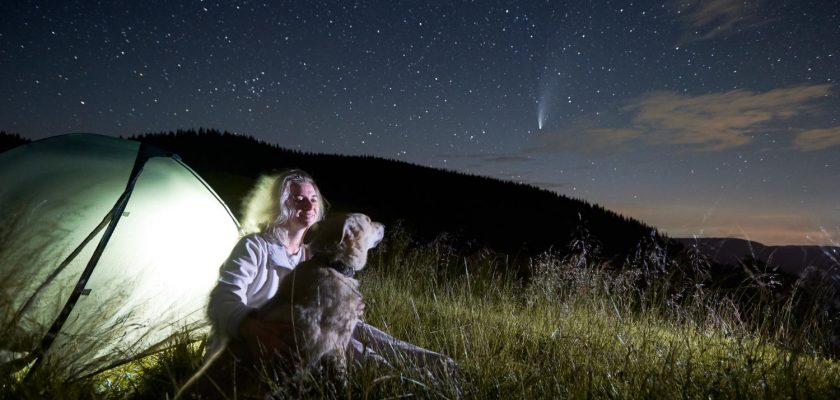
Have you ever looked up at the night sky and wondered how you can find planets? You’re not alone!
Many people have gazed up at the stars and wished they could locate planets in their own backyard. Fortunately, it’s easier than you might think to spot planets in the night sky.
Here, we’ll provide an overview of how to locate planets and provide some tips for novice planet hunters.
Identifying Planets
The first step in identifying planets is to understand what type of celestial body you’re looking for. A planet is a large, spherical object that orbits around a star. It has no light of its own but instead reflects light from its host star.
Additionally, planets are much smaller than stars and appear as dots of light in the night sky. That means they can easily be mistaken for stars or other objects if you don’t know what to look for.
When searching for a planet, it’s important to use proper observational tools like binoculars or a telescope to help enhance your view of the night sky.
This will allow you to observe distant objects more clearly and make it easier to identify faint planetary bodies that might otherwise be too difficult to make out with the naked eye.
Additionally, using a star chart app like Stellarium can help you plan your observation sessions so that you’re targeting specific regions of space on any given night.
Spotting Planets
Once you know what type of celestial body you’re looking for and have the right equipment, it’s time to start hunting for planets!
The best way to begin your search is by looking for bright stars or constellations that mark certain points in the night sky; these will act as reference points when trying to spot planets.
Additionally, it’s important to remember that all planets move across the sky from east to west over time—so if you see a bright dot moving slowly against background stars, then chances are good that it’s a planet!
Finally, pay attention to where each planet was located relative to other nearby stars or constellations when making your observations; this will help confirm whether or not what you’re seeing is actually a planet rather than just another natural object in space.
By doing this regularly and recording your observations over time, you may even be able to notice patterns in planetary movement and gain valuable insights into our Solar System!
Conclusion
With just some basic knowledge about what makes a planet unique and the right tools at hand, anyone can become an expert planet hunter!
While spotting any one particular planet may require some patience—not every world is visible on any given night—by taking notes about where different worlds appear relative to other objects in space over time, soon enough even novice stargazers will be able to spot them with ease.
So, grab some binoculars or set up your telescope tonight and get ready for an exciting journey into our Solar System!

