
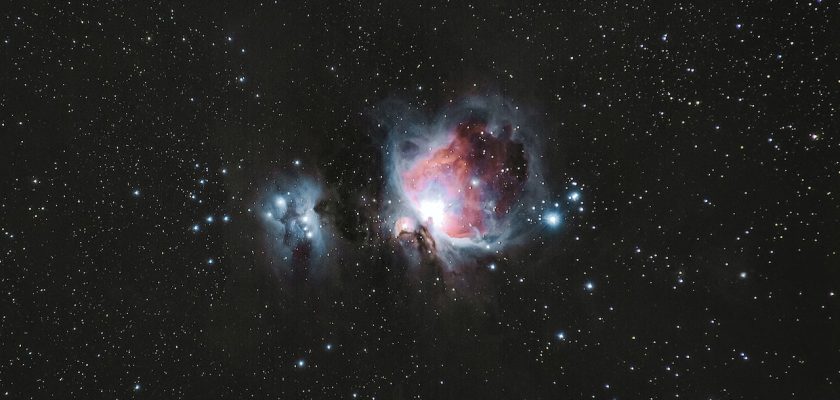
Have you ever heard of a luminous red nova? These stellar explosions are fascinating astronomical events that occur when two stars collide in a binary system.
In this blog post, we’ll discuss what luminous red novae are and why they’re so interesting to scientists.
What is a Luminous Red Nova?
A luminous red nova (LRN) is an event that occurs in binary systems when two stars—usually two white dwarfs—collide. When the two stars merge, their combined mass can cause a massive thermonuclear explosion that can be seen from many light-years away.
This explosion causes the star to become much brighter than it was before the collision, and it emits a reddish glow that can last for months or even years.
The exact brightness of an LRN depends on the masses of the stars involved in the merger and how fast they spin around each other.
Why Are They Interesting to Scientists?
Luminous red novae are extremely rare events, but they are of great interest to astronomers because they provide insights into stellar evolution and stellar dynamics.
LRNs allow researchers to observe how material moves around in binary systems, which helps them better understand the physics behind these types of collisions.
Additionally, LRNs enable scientists to study what happens when white dwarfs merge with other kinds of stars—something that has never been observed before! This data is invaluable for furthering our understanding of stellar evolution and merging binary systems.
Conclusion
In conclusion, luminous red novae are incredibly fascinating astronomical events that occur when two stars collide in a binary system.
Not only do they provide researchers with valuable insight into stellar evolution and dynamics, but they also allow us to explore what happens during white dwarf mergers—something we have never seen before!
With more research into LRNs, astronomers will continue to unlock new mysteries about our universe.

