Jupiter and Saturn are two of the most well-known planets in our solar system. Though they both shine brightly in the night sky, the similarities between these two worlds end there.
From their sizes to their compositions, Jupiter and Saturn differ drastically from one another.
Let’s take a closer look at each planet to better understand what sets them apart from one another.
Size Difference
We all know that Jupiter is the largest planet in our solar system but did you know that it is more than twice as large as Saturn?
That’s right. Even though Saturn is no slouch when it comes to size, with a diameter of 74,900 miles compared to 88,800 miles for Jupiter, the difference in mass between them is even more dramatic.
The mass of Jupiter is 318 times greater than that of Saturn! This massive difference has caused scientists to call Jupiter a “failed star” due its immense size and composition.
Composition Difference
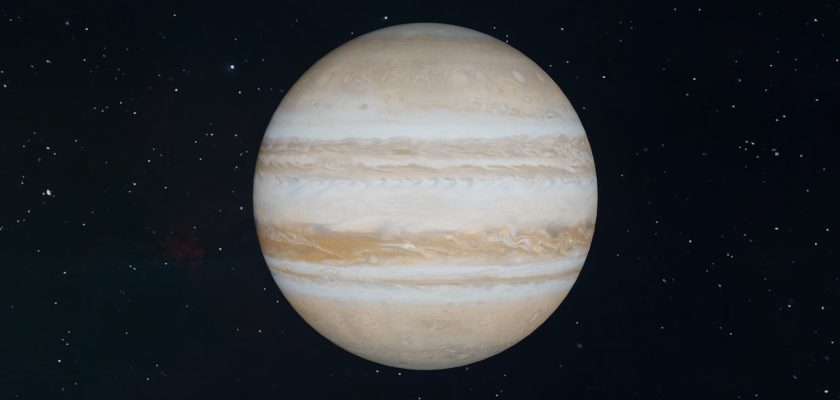
Jupiter is composed mostly of hydrogen (90%) and helium (10%). These gases give the planet its distinctive coloration—a brilliant swirl of reds, oranges, yellows, blues, and whites—and account for its enormous size.
On the other hand, Saturn consists mostly of hydrogen (96%) with some helium (3%), methane (2%), ammonia (1%), water vapor (1%), carbon monoxide (<1%), and other trace elements (<1%).
The combination of these elements gives Saturn its yellowish hue which can be seen through a telescope or binoculars from Earth.
Conclusion
It’s clear to see why these two planets have been so captivating throughout history; each world has fascinating features that make it unique from the other.
While both planets contain impressive amounts of gas and dust, their sizes differ quite drastically as do their compositions.
We hope this article gave you some insight into why these two planets are so different from one another despite sharing similar characteristics!

