Have you ever looked up at the night sky with wonder, marveling at the beauty of the moon?
With a telescope, you can take your exploration of our closest celestial neighbor to a whole new level. You may be surprised to learn just what you can see on the moon with a little help from modern technology.
Let’s look at some of the features and wonders that await us when we peek through a telescope lens.
The Man in the Moon
One thing that many people are surprised to find is that they can actually make out human-like features on the moon’s surface.
These features, referred to as “maria” (Latin for “seas”), are dark patches formed by ancient lava flows.
While it might seem like these shapes form a face or some other figure, they actually have nothing to do with each other—they just happen to be in close proximity due to their formation process.
But if you squint hard enough, you can almost make out what looks like an eye, nose, mouth, and even hair!
Craters and Mountains
Another thing that telescopes allow us to see is craters and mountains on the moon’s surface. As we all know, the moon has no atmosphere, so there is no erosion over time.
This means that most of its terrain has stayed untouched for billions of years! With a telescope, we can get close enough to make out individual mountains and craters caused by asteroid impacts millions of years ago.
Even better, we can also watch as shadows created by these mountains move across the lunar landscape as our satellite rotates around Earth—a truly breathtaking sight!
Earthshine
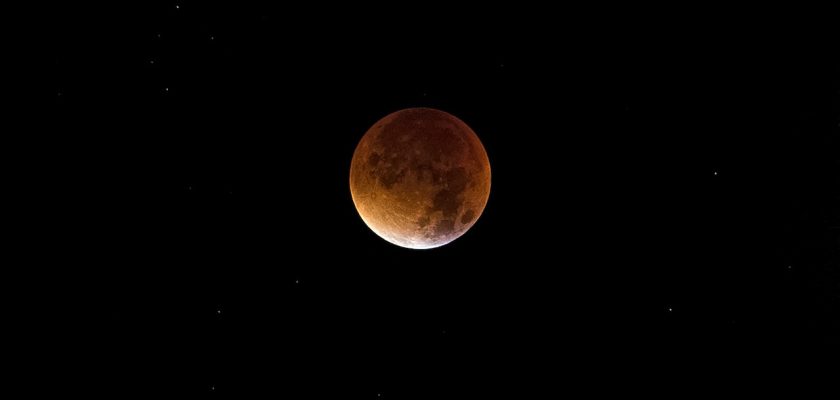
Finally, when looking at the moon through a telescope lens you will likely spot something called Earthshine—the faint light reflecting off Earth onto its natural satellite.
This phenomenon occurs when sunlight reflects off Earth’s surface and casts a faint orange glow onto the dark side of the lunar surface. It’s an incredible sight that shows us how interconnected our own planet is with its satellite counterpart!
Conclusion
Looking through a telescope lens offers us an opportunity to explore and appreciate our natural surroundings in ways we never thought possible before.
From seeing human-like features on its surface to witnessing beautiful Earthshine reflected on its dark side – there is so much more than meets the eye when it comes to studying our closest celestial neighbor!
The next time you look up into the night sky and admire its beauty don’t forget – there is much more than meets your eye waiting for you if only had access to a good quality telescope!

