When you look up into the night sky, stars appear as small twinkling points of light. But when you look at them through a telescope, they become something entirely different.
Telescopes allow us to see all the intricacies of distant celestial bodies in ways that our eyes can’t.
Let’s take a closer look at what stars look like through a telescope and how telescopes help us explore the night sky.
The Appearance of Stars Through a Telescope
When viewed through a telescope, stars appear much brighter and sharper than they do to the naked eye. This is because telescopes are able to collect more light and focus it on your eye’s retina, allowing you to better make out details that were previously too faint or too far away.
This also means that with more powerful telescopes, such as those used by professional astronomers, stars can be seen in even greater detail. Some of these details include star color and size variations, as well as differences in brightness between different parts of the star field.
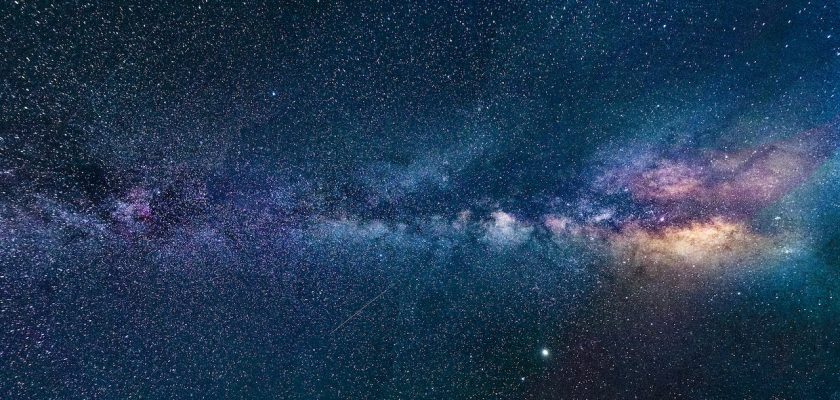
Telescopes also allow us to see objects beyond just individual stars. When we look through a telescope, we can see entire galaxies filled with billions of stars and gas clouds spanning thousands of light-years across space.
We can view nebulae—dense interstellar clouds where new stars are born—and cluster formations consisting of hundreds or even thousands of individual stars all bound together by gravity. We can even see planets orbiting other stars in our own galaxies!
Telescopes Help Us Explore the Universe
Telescopes allow us to explore space in ways that would have been impossible without them.
They provide an unprecedented level of detail and clarity when looking at distant celestial bodies, allowing us to uncover secrets about our universe that were previously unknown or unseeable with ordinary eyesight alone.
Telescopes allow us to map out new regions of space and discover distant galaxies hiding behind thick veils of dust and gas clouds.
They also enable us to study planets around other stars and analyze their atmospheres for potential signs of life beyond Earth!
Conclusion
Through telescopes, we gain an incredible level of detail when exploring the night sky—from individual star colors and sizes to entire galaxies containing billions upon billions of stars!
Telescopes open up whole new realms for exploration, enabling us to study distant regions of space like never before and uncover secrets about our universe that were once hidden from view.
Whether you’re an amateur astronomer or professional scientist, there’s no doubt that telescopic views are essential for understanding our universe today!

