
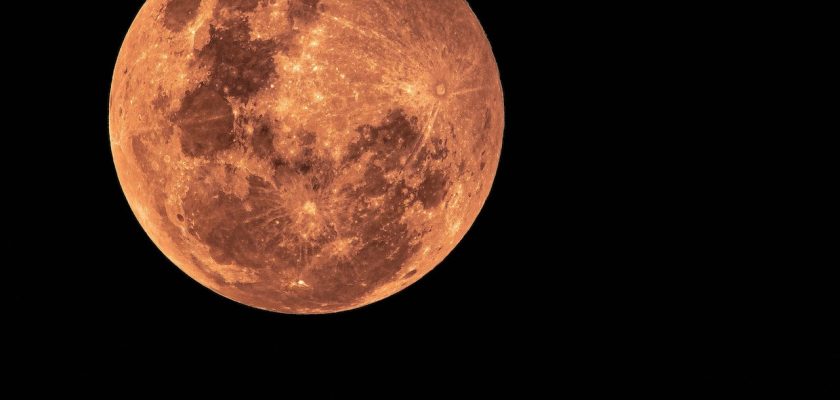
Venus is the second planet from the Sun and one of the most interesting planets in our Solar System.
Its thick atmosphere and breathtaking clouds make it look like a glowing, bright star in the night sky. But what does Venus actually look like up close?
Let’s take a closer look at this beautiful planet.
The Appearance of Venus from Space
From space, Venus looks like a bright yellowish-white ball with light blue hues. It appears much brighter than any other planet in our Solar System, except for the Moon.
This is because of its thick atmosphere, which is made up mostly of carbon dioxide and nitrogen. The clouds on Venus are composed mostly of sulfuric acid droplets and form a layer that covers 86% of the planet’s surface.
Surface Features
The surface features on Venus are quite different compared to those on Earth. The surface is covered with vast plains and volcanic regions, but there are few large mountains or deep canyons like those found on Earth.
The plains are composed mostly of basaltic lava flows created by ancient volcanoes, while the volcanic areas contain hundreds of impact craters formed by meteors striking its surface millions of years ago.
There are also several coronae – circular features formed when molten rock rises up through cracks in the crust – scattered across its landscape as well as thousands of isolated volcanoes known as arachnoids (due to their spider-like appearance).
Atmosphere
The atmosphere of Venus is over 90 times thicker than Earth’s and consists mainly of carbon dioxide with traces of nitrogen and sulfuric acid vapor.
The high pressure causes temperatures to reach an average high near 860°F (460°C), making it one of the hottest planets in our Solar System despite being so far from the Sun!
In addition to its dense atmosphere, powerful winds whip around the planet at speeds over 400 mph (640 km/h) creating huge dust storms that can last weeks or months at a time.
Conclusion
Venus is an incredibly fascinating planet that stands out among other members of our solar system due to its thick atmosphere and unusual surface features.
Its hazy golden hue makes it appear much brighter than any other planet except for our own moon when viewed from space, while its scorching hot temperatures make it an inhospitable place for life as we know it here on Earth!
Despite these obstacles, scientists have been able to learn more about this mysterious world thanks to advanced technology such as robotic probes sent from Earth to explore its unique environment firsthand!

