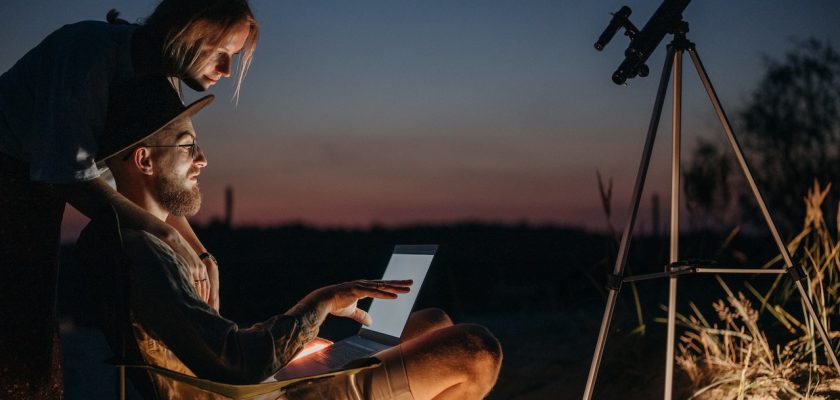
Stargazing is one of the most enjoyable activities for amateur astronomers. It doesn’t require any expensive equipment and can be done from anywhere with a clear night sky.
But if you want to get the most out of your stargazing experience, then investing in a telescope is essential. Telescopes can help you to see more stars and planets than the naked eye can ever hope to detect.
In this blog post, we’ll take a look at how to use a telescope for stargazing, so that you can start enjoying the night sky like never before!
Choosing the Right Telescope
The first step in using a telescope for stargazing is choosing the right telescope for your needs. There are several factors to consider, such as the size of the aperture (the diameter of the main lens or mirror), the type of mount (alt-azimuth, equatorial, or Dobsonian), and other features such as computerized tracking and GoTo capabilities.
If you’re just starting out with astronomy, then it’s best to stick with an entry-level model like an 80mm refractor or 6″ Dobsonian reflector. These will allow you to observe bright objects such as planets and stars without breaking your budget.
Setting Up Your Telescope
Once you have chosen your telescope, it’s time to set it up! This process involves positioning your telescope on its mount according to your geographic location and aligning it with north or south depending on whether you have an alt-azimuth or equatorial mount.
Once setup is complete, you can begin using the finderscope attached to the main tube of your telescope in order to locate stars and other celestial bodies in the night sky.
Some telescopes come equipped with computerized tracking systems that will automatically move the scope based on coordinates entered into its controller; however, these are better suited for advanced users since they require precise alignment of both scope and controller before use.
Using Your Telescope
When using your telescope for stargazing, be sure to always use an eyepiece that provides low power magnification (around 25x). This will give you a wide field of view which will make locating objects easier than if you were looking through higher magnification eyepieces.
Additionally, many modern telescopes come equipped with red dot finders which project onto small LCD screens inside their oculars; these are invaluable tools when trying to locate objects quickly in dark skies!
Finally, don’t forget that patience is key when it comes to stargazing; sometimes objects may take several minutes (or even longer) before they come into focus due to atmospheric turbulence or light pollution from nearby cities/towns.
Conclusion
Stargazing is one of life’s great pleasures – but if you want even more enjoyment out of it then investing in a good quality telescope is essential!
With proper guidance on how to choose and use one properly, anyone can enjoy stunning views of planets, star clusters, and galaxies from their own backyard!
We hope this beginner’s guide has given you some useful tips on getting started with stargazing using a telescope – Happy viewing!

